



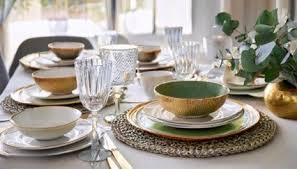
A Set Table Makes Even Tuesday Dinner Feel Like an Occasion
There is a small daily magic available to anyone with a table: set it properly, and ordinary food tastes better in a room that feels considered. Restaurants know this — the cloth, the weight of the cutlery, the glass that catches the light are all part of the meal before a bite arrives. The good news is that how to set a dining table is a learnable grammar, not an inherited talent: one basic setting that handles every day, a casual upgrade for friends, and a formal layout for the rare grand occasion — all built from the same simple rules about where things stand in relation to the plate. This guide teaches all three levels, the centrepiece and lighting that finish the effect, and the five mistakes that quietly undo an otherwise lovely table. For the styling pieces that dress the table between meals, our guide to decorative accents is the natural companion.
The Basic Setting: Your Everyday Grammar
Everything radiates from the plate, placed centred on the placemat or charger, an inch from the table’s edge. Fork on the left, knife on the right with its blade facing the plate, spoon to the right of the knife if soup or dessert needs one. The memory aid professionals use: utensils are placed in the order of use, working from the outside in — so the diner simply starts at the edges and moves toward the plate with each course. Glasses stand above the knife: the water glass directly above it, a wine glass to its lower right when wine is served. The napkin belongs on the plate, under the fork, or on the left — anywhere except inside the water glass, a flourish that belongs to banquet catering. Bread, in homes that serve it, takes a small plate above the forks with its own butter knife. That is the entire grammar of the basic setting; it takes ninety seconds, and it converts a thrown-together meal into a seated one. Children who grow up setting this learn the formal version later as a variation, not a foreign language.
The Casual Upgrade: Friends, Weekends, Long Lunches
For guests without grandeur, keep the basic setting and add warmth around it. A runner or cloth (linen, ideally slightly imperfect — ironed within an inch of its life reads as anxiety) softens the table’s sound and signals occasion. Layers under the plate — a charger or woven placemat — add the visual “setting” even when the menu is one pot in the middle. Serve family-style where the food allows: big dishes in the centre turn serving into participation and the table into the event. Add one level change — a cake stand for bread, a board raised on books for cheese — because height variety is what separates a styled table from a flat one. Glasses can relax (tumblers for wine are a Mediterranean birthright), the playlist and the lighting do as much as the objects, and the host sits down — a table where the host keeps vanishing to the kitchen is set correctly and hosted wrongly. This level, most households find, is the sweet spot: ninety percent of the pleasure of the formal table with ten percent of the effort.
The Formal Layout: For the Rare Grand Occasion
Formal settings are the basic grammar with more courses spelled out. From the outside in on each side, you may meet: a soup spoon (right, outermost), salad fork (left, outermost), then dinner fork, dinner knife, fish or starter cutlery where served — each course removes its utensils with the plate, so the setting literally narrows as the meal progresses. Dessert cutlery lies horizontally above the plate, fork handle to the left, spoon handle to the right. Glasses form a small constellation above the knives: water front-left of the group, white wine, red wine stepped behind — in practice, place the glasses for the wines you are actually pouring and no others. A place card, even handwritten on a scrap of good card, is the formal table’s kindest feature: it removes the hovering where-do-I-sit moment and lets the host engineer the conversation. If this level appears twice a year in your house, it is appearing exactly often enough — set it unhurriedly in the afternoon, photograph it for future reference, and enjoy the theatre of it without letting the theatre run the evening.
Centrepieces and Light: The Finishing Half
More tables are ruined by the centrepiece than by any cutlery error. The rules are mercifully simple: low or tall-and-thin, never a wall at eye level — guests must see each other, so arrangements stay below 30 cm or rise above the sightline on slender stems. One generous low arrangement beats a dotted line of small ones; in season, a bowl of fruit, a tumble of candles in glass, or branches in a tall vase all outperform florist formality at home. Candles are the table’s lighting department: several, unscented at the table (scented candles season the food without permission), at varied heights, lit before guests sit down. Overhead light, if used, dims to let the candles lead — faces lit softly from the table upward is the most flattering light in domestic life, which is why everyone lingers. Keep practical clearances: serving space matters more than decoration, matches and spare candles live in one known drawer, and anything fragile or wobbling leaves the table where children or elbows are in play. A dining table, in the end, obeys the same law as the bedroom at the other end of the day — calm surfaces, deliberate objects, nothing homeless — a connection our guide to bedroom storage ideas explores where the house goes quiet.
The Five Mistakes (and Tonight’s First Set Table)
The classics: cutlery placed inside-out so diners strand themselves mid-meal; the water glass forgotten until someone asks; a centrepiece that turns dinner into a conversation through foliage; settings squeezed so elbows duel; and the host still plating in the kitchen while guests admire an empty table. All five are scheduling and spacing errors, not taste errors — which means they are free to fix tonight. So fix them tonight: set the basic setting for an ordinary dinner, add a runner and two candles, sit down with everyone else, and notice how a ninety-second ritual changes the meal’s entire temperature. Formal grammar can wait for its occasion. The everyday table — set with intention, lit with warmth, and shared at leisure — is where the good life actually happens.
